
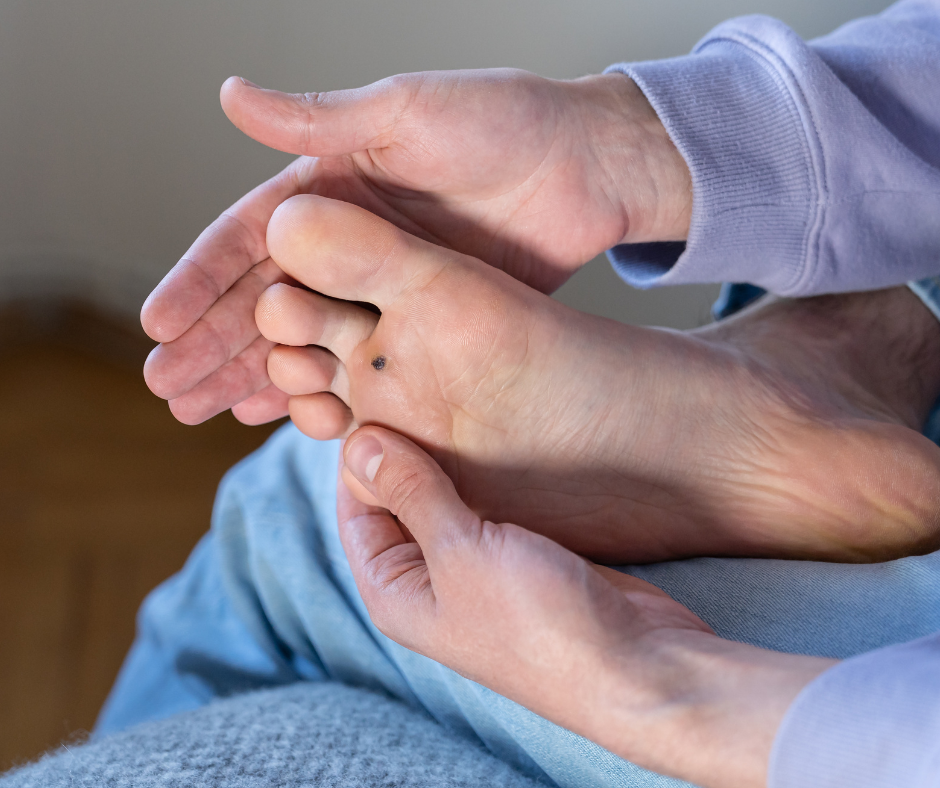
Plantar Wart or Callus? How to Tell the Difference
A thick spot on the sole of your foot may seem harmless, but it is not always just hardened skin. A plantar wart and a callus can look similar, yet they develop for different reasons and may require care. The podiatrists at New Jersey Podiatric Physicians & Surgeons Group explain how to recognize the differences and when to schedule an evaluation.
What Does a Plantar Wart Look Like?
A plantar wart is a skin growth caused by human papillomavirus, or HPV. The virus can enter through cuts or weakened areas of skin, and plantar warts can spread through direct contact or contaminated surfaces.
Because these warts develop on weight-bearing areas, pressure may cause them to grow inward beneath a layer of hardened skin. Possible signs include:
- A rough, grainy growth
- Tiny black dots from clotted blood vessels
- Skin lines that stop or curve around the growth
- Tenderness while standing or walking
- Pain when the area is squeezed from the sides
Plantar warts may appear alone or in clusters.
How Is a Callus Different?
A callus is a thickened area of skin that forms in response to repeated pressure or friction. Tight shoes, foot structure, gait problems, and high-impact activities can all contribute.
Unlike plantar warts, calluses are not caused by a virus and are not contagious. They generally have a more even, thickened appearance, and the normal lines of the skin may continue across them. A callus may feel tender when direct pressure is applied, particularly when it becomes thick or develops over a prominent bone.
Why Does the Correct Diagnosis Matter?
It can be difficult to distinguish a plantar wart from a callus at home, especially when a wart is covered by thick skin. Treating the wrong condition may delay relief or irritate the area.
Do not cut, shave, or apply medicated products to a foot growth without guidance, especially if you have diabetes, poor circulation, neuropathy, or a weakened immune system. A podiatrist can examine the area, determine the cause, and recommend treatment.
At New Jersey Podiatric Physicians & Surgeons Group, our experienced podiatrists help resolve foot issues and develop personalized treatment plans that restore comfort and mobility. With more than 30 locations, from Newark, NJ, to Cape May, NJ, we value convenience and excellent service for our patients. To schedule an appointment, first find a podiatrist in your area.
